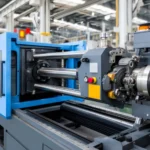
In an injection molding plant, the mold is the production line. One tool may run several part numbers in the same shot. Material may go through the press, come back as regrind, and go through again. Presses run around the clock, and every cycle consumes resin whether or not anyone is watching the screen.
An ERP designed around simple discrete jobs and static material usage strains under that picture. Molders end up with workarounds: duplicate item records for tooling, regrind tracked on a clipboard, and production counts corrected by hand at the end of the shift.
This post covers what molders should expect from an ERP and how DELMIAWorks addresses each point. It draws on DELMIAWorks plastics documentation and on the experience of DR Software Services in implementing DELMIAWorks for injection molders and other plastics manufacturers.
The Tool Is the Unit of Production
In most discrete manufacturing, a routing describes the operations that make one part number. In molding, the physical tool defines what can run. A family tool produces several part numbers in the same shot. A multi-cavity tool produces several of the same part at once. An ERP that assumes one tool and one part number forces workarounds that distort both production counts and inventory.
DELMIAWorks documentation addresses this directly. Its multi-tool and family tool functionality is designed so the system understands multiple part numbers within the same physical tool. Its multi-level bills of material come pre-defined for tool and die-based plastics manufacturing. Our own industry overview describes the same strength: support for multi-cavity and family molds.
What to look for in any ERP: tool records that connect to the part numbers they produce, BOM structures that reflect how the tool actually runs, and production reporting that lands on the right part numbers without manual allocation.
Material Does Not Stop at the Press
Material handling is where molding differs most from assembly work. Resin is blended with colorants and additives. Runners, sprues, flash, and rejected parts can return as regrind and be consumed again. Units of measure move between pounds, kilograms, and pieces depending on who is asking.
DELMIAWorks documentation describes features built for this reality:
- Regrind usage and consumption tracking, including scrap rates and options for runner and sprue or parison and flash consumption
- Recipes and blends for material mixes
- Multiple unit-of-measure conversions so purchasing, the floor, and finance can each work in their own units
- Raw materials outside the master inventory, which can be added and consumed when a material does not fit a standard item record
Shelf life management adds another layer. DELMIAWorks can track attributes such as moisture content and color, automatically identify expired inventory as non-conforming, and send electronic alerts. For a molder, that means material that should not run does not quietly slip into production.
Presses That Report for Themselves
Keyed production entry is where accuracy goes to die on a busy shift. An operator is changing a tool, a press is cycling, and the count gets written down later from memory.
DELMIAWorks documentation describes its RealTime Production Monitoring System as automatically tracking data directly from work centers and updating production schedules and inventory as production happens. Our industry overview adds that, for injection molding, the system monitors cycle times and material usage and provides real-time machine integration. For more on how monitoring works, see our earlier post, What is Real-Time Process Monitoring in DELMIAWorks?
The same documentation describes a drag-and-drop graphical scheduling tool that shows the entire production schedule and the variables that affect capacity. That matters on the days a tool change runs long or a press goes down and the plan for the whole shift has to move.
Quality and Traceability Follow the Lot
Many molders supply customers with strict quality requirements, including automotive and medical programs. When a quality issue appears, the questions come in a predictable order: which resin lot, which tool, which shipment.
DELMIAWorks provides lot and serial traceability from material receipt through production to shipment, and it manages non-conformances, corrective actions, and inspection records in the same system as production and inventory. The answer to “which lot, which tool, which shipment” is in the system rather than in a binder.
Five Questions to Ask Before You Commit
Whatever ERP you evaluate, put these questions to the vendor and ask to see the answer on screen, not on a slide:
- Can one physical tool carry several part numbers, and does production post correctly to each of them?
- How does regrind come back into inventory and cost, and can you see scrap rates by tool and material?
- Can presses report production without keyed entry, and does that data update the schedule and inventory?
- Can the schedule show the capacity variables that actually limit your plant?
- Can you trace a resin lot to the finished parts and the shipments that used it?
A system that answers all five without a workaround is built for how molders actually run.
Features Exist. Configuration Decides the Result.
Capabilities depend on which modules you license and how they are configured. Tool records, material recipes, regrind rules, and press connections all have to be set up to match your plant. A molder running a handful of presses has different needs than a plant running dozens, and the configuration should reflect that.
That setup work is where an implementation partner earns its keep. DR Software Services is a certified DELMIAWorks implementation partner with experience implementing for molders and other plastics manufacturers. If you are evaluating DELMIAWorks for your molding operation, or running it today and wondering whether it could do more, reach out at info@drsoftwareservices.com or visit drsoftwareservices.com/our-services.